How to Remove Labels from Jars and Containers
A step-by-step way to get paper labels and sticky residue off glass jars, tins and plastic containers using warm soapy water and a paste of cooking oil and baking soda.
Tutorial at a glance
Materials
- Clean glass jars, tins or plastic food containers
- Warm water and dish soap
- Cooking oil, about 1 tablespoon
- Baking soda, about 1 tablespoon
- Rubbing alcohol for stubborn residue (optional)
Learning how to remove labels from jars is the first real step of most container projects. Paint, paper and twine all sit better on bare glass, and a jar with gray scraps of label still stuck to it never looks finished, however carefully it is decorated.
The method here needs nothing beyond what is in a kitchen: warm soapy water to lift the paper, then a paste of cooking oil and baking soda to shift the sticky layer underneath. It takes a few minutes of work and a longer wait while the jar soaks.
What you need
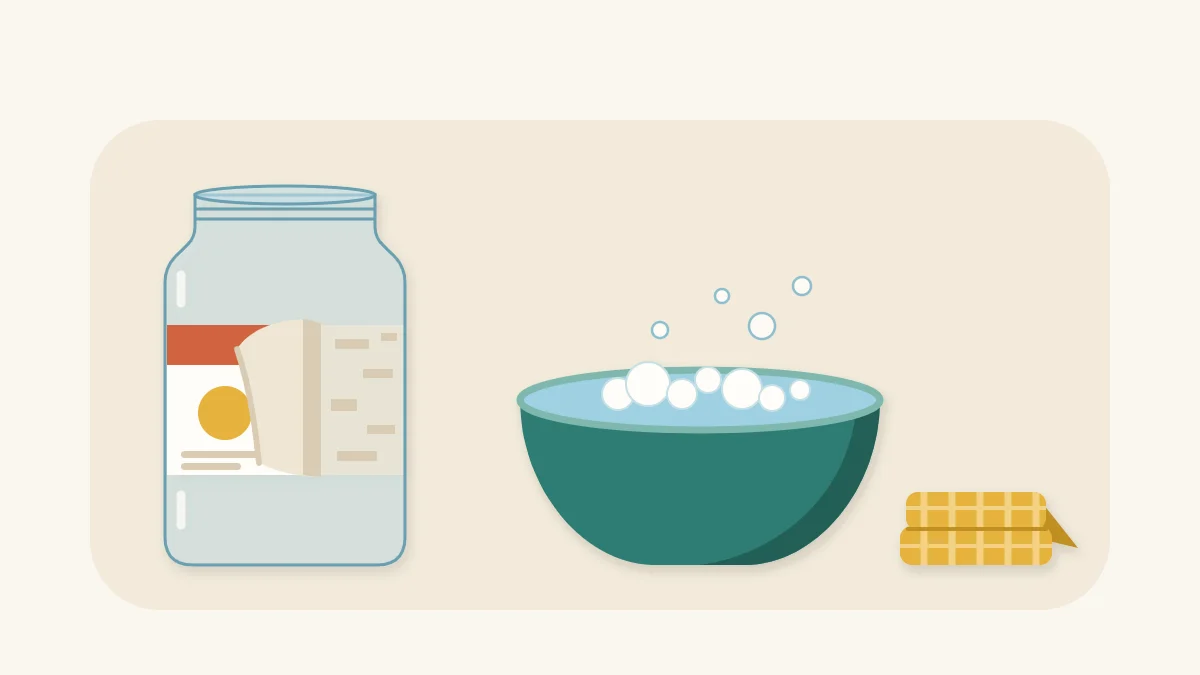
- A sink, bowl or bucket deep enough to cover the label
- Warm water and dish soap
- Cooking oil, any kind
- Baking soda
- A small dish and a spoon
- A soft cloth or the rough side of a dish sponge
- A clean towel for drying
Before you start
Use containers that held food or drinks. Jars and bottles that held cleaning products, paint, garden chemicals, medication or anything you cannot identify are not worth saving for crafts, with or without the label. The guide to which materials to save lists what to keep and what to skip.
Wash out the inside first so the soaking water stays clean. Then check the glass: a jar with a chip on the rim or a crack in the wall goes in the recycling bin, because soaking and rubbing put pressure on weak spots.
Let a jar from the refrigerator come to room temperature before it goes into warm water. Glass can crack when its temperature changes suddenly.
Remove the label step by step
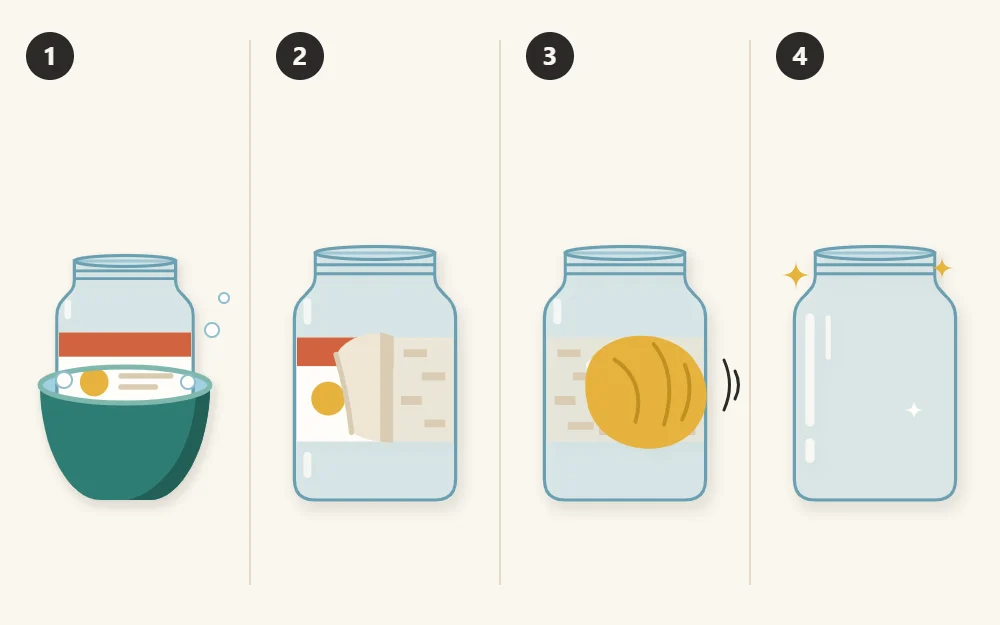
- Soak. Fill the bowl with warm water and a squirt of dish soap. Submerge the jar, filling it with water so it does not float, and leave it for about 20 to 30 minutes. Thick or glossy labels may need an hour or more.
- Peel. Lift a corner with a fingernail and pull slowly. A well-soaked paper label often slides off in one piece. Rub away any paper left behind with your thumb or the sponge while the jar is still wet.
- Rub the residue. Mix the paste described below, spread it over the sticky area and leave it for about 10 minutes. Then rub in small circles with a cloth until the adhesive rolls up into soft crumbs.
- Wash and dry. Wash the jar again with dish soap to remove the oil, rinse, and dry it with a towel. Run a fingertip over the glass. If it still drags anywhere, repeat step 3 on that patch.
The oil and baking soda paste
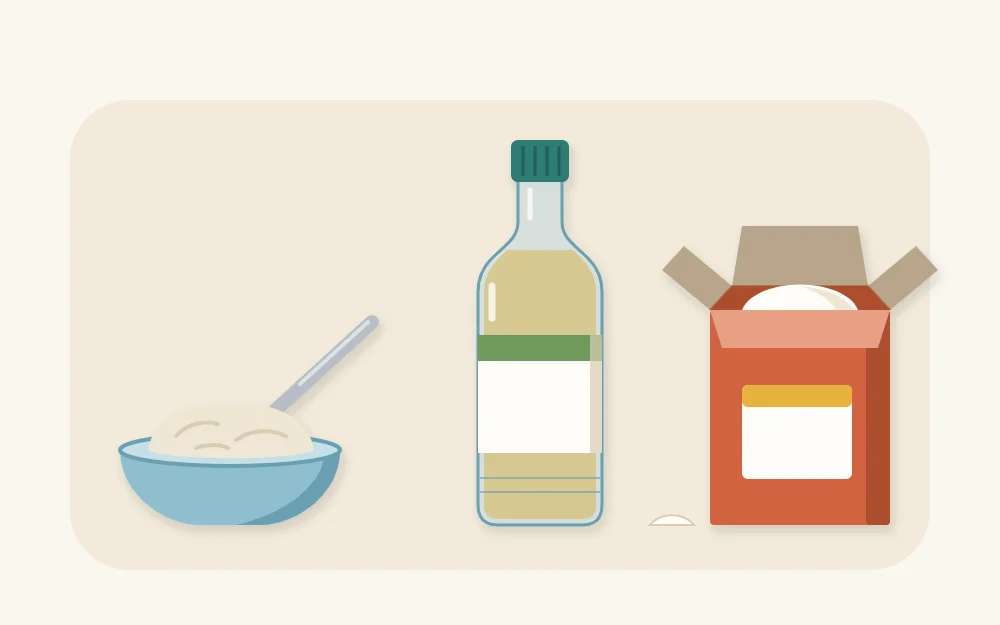
Stir roughly equal parts cooking oil and baking soda in a small dish: a tablespoon of each is plenty for two or three jars. The mix should be a thick paste that stays where you put it, so add a pinch more baking soda if it runs.
The two ingredients do different jobs. Oil soaks into many label adhesives and loosens their grip on the glass, while the fine grains of baking soda give a gentle scrub that lifts the softened glue without scratching.
Tip
Time does more than force. If the residue smears instead of rolling off, spread on a fresh layer of paste and wait another 10 minutes before rubbing again.
If the residue will not budge
Some adhesives resist oil. For those, dampen a corner of a cloth with rubbing alcohol and wipe the sticky patch, turning the cloth to a clean area as it picks up glue. Wash the jar with soapy water afterward.
Watch out
Rubbing alcohol is flammable and its fumes build up quickly. Open a window, work away from flames and other ignition sources such as a lit stove, and keep the bottle capped between uses.
A plastic-film label that peels off whole and leaves a full rectangle of glue is another common case. Skip the long soak for these: peel the film dry, then go straight to the paste.
What to avoid
- Harsh solvents. Strong chemical removers are unnecessary for a craft jar, need careful handling and can damage plastic and painted lids.
- Blades on glass. Scraping with a knife or razor can scratch the surface, and a slip on wet glass is an easy way to cut a hand. A fingernail, an old plastic card or a wooden craft stick is enough.
- Very hot water on cold glass. Warm water from the tap is all this method needs.
- Steel wool and scouring powder. Both leave fine scratches that show through clear paint and thin paper.
Tins and plastic containers
The same steps work on other packaging, with small changes.
| Container | What changes | Residue method |
|---|---|---|
| Glass jar or bottle | Nothing: follow the steps as written | Paste first, rubbing alcohol if needed |
| Tin can | Shorter soak, then dry at once so the steel does not rust; mind the rim | Paste, rubbed along the ridges |
| Plastic container | Soft cloth only, since plastic scratches easily | Paste; test alcohol on the base first |
Most paper labels on food cans are glued along a single seam, so they often tear off dry and leave one narrow stripe to clean. Check the cut rim for sharp edges before handling the can much.
On plastic, rubbing alcohol can cloud some surfaces or lift printed designs, which is why a test on the underside is worth the minute it takes.
Date codes and what comes next
Many jars and lids carry a small printed date or batch code. Removing it is optional. It sometimes rubs off with the oil paste or rubbing alcohol, and where it does not, it will disappear under paint or a paper band anyway. Turning the code to the back is the easiest fix for a jar you plan to leave clear.
Once the glass is clean and fully dry, it is ready to use. For decorating methods, see the overview of glass jar crafts. If the jars will stay plain and hold buttons, beads or pens, the jar storage ideas show how to group and label them.
Frequently asked questions
How long should I soak a jar to get the label off?
Thin paper labels usually loosen after about 20 to 30 minutes in warm soapy water. Thick, glossy or coated labels take longer because water has to work in from the edges, so leave those for an hour or even overnight. If a corner lifts easily with a fingernail, the jar is ready.
Why does oil remove sticky label residue?
Cooking oil soaks into many label adhesives and weakens their hold on the glass. Baking soda adds a mild abrasive that helps lift the softened glue as you rub. Any cooking oil works. The paste leaves a greasy film, so finish with dish soap.
Do I have to remove the printed date code from a jar?
No. The code is only a cosmetic issue. It sometimes wipes off with the oil paste or a little rubbing alcohol on a cloth, but if it stays, paint or a paper wrap will cover it. On a jar that stays clear, simply turn the code toward the back.